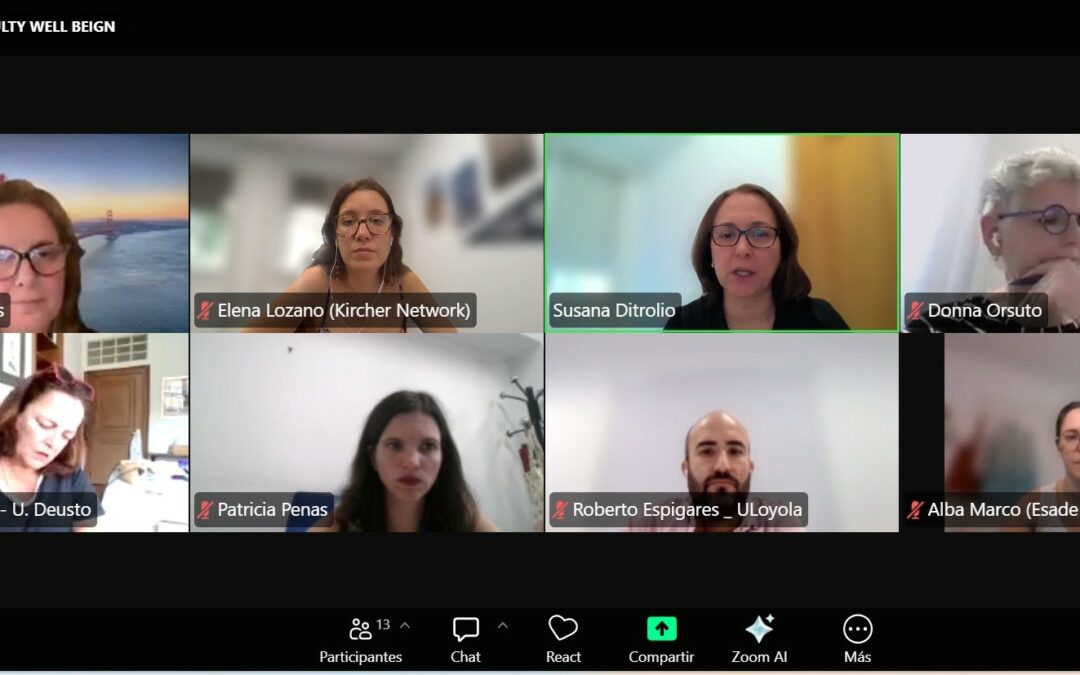
The Kircher Network also ran a dedicated Erasmus BIP Staff Training on Erasmus Opportunities, organised under the leadership of the Office of International Relations of Loyola University Andalusia. The training combined four virtual sessions in June — covering KA131 mobility, KA171 cooperation with third countries, Jean Monnet modules, and KA2/KA3 projects — with an in-person week hosted by Ignatianum University in Krakow, July 5–10. The programme gathered 15 participants from Kircher Network member institutions, along with three guest participants from Pontifical Javeriana University and the Catholic University of Ukraine.
Participants worked through the practicalities of building successful Erasmus proposals, from mastering award criteria and evaluation thresholds to designing coherent work packages, budgeting, risk management, and ensuring long-term impact and sustainability, with sessions led by colleagues from Pontifical Comillas University, University of Deusto, ESADE Business & Law School, Loyola University Andalusia, and the University of Namur. A dedicated AI workshop run by Loyola University Andalusia introduced participants to using artificial intelligence tools to support the preparation and management of Erasmus proposals. The training also included a joint session with the International Relations officers to explore new collaborative projects, and closed with participants presenting the proposal ideas they had developed during the week.