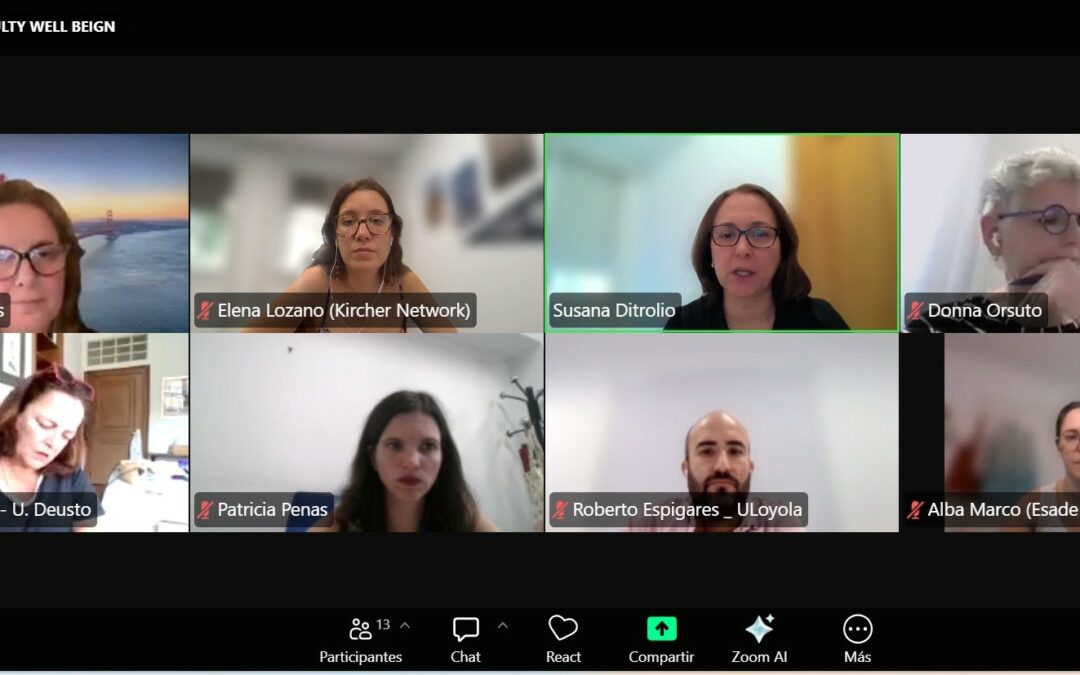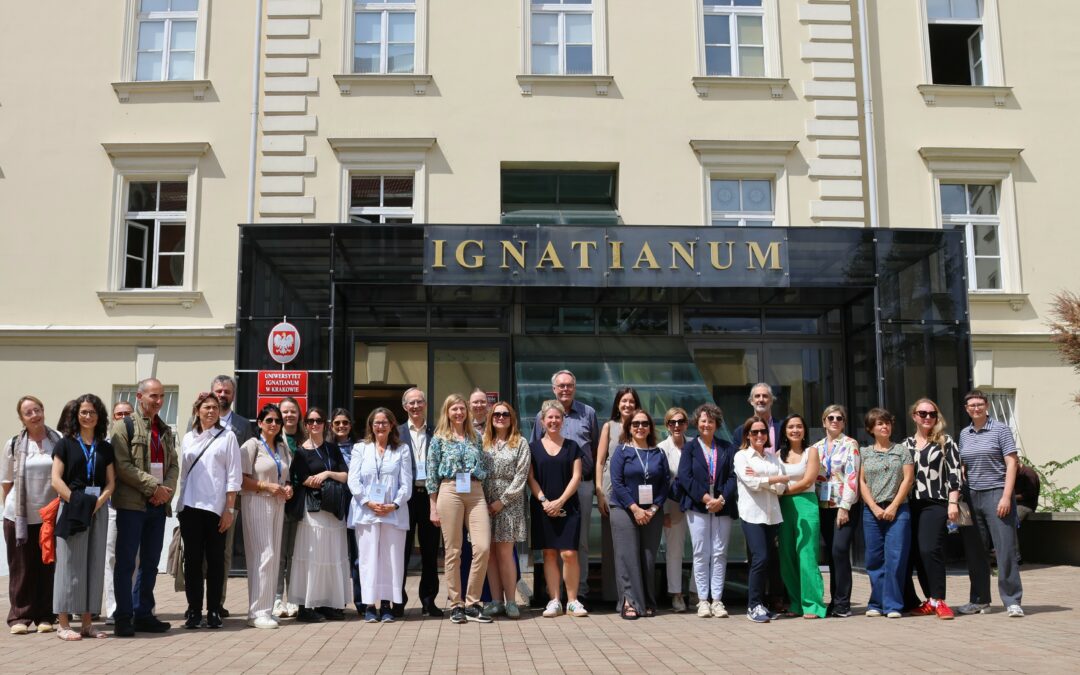
Following the in-person gathering at the Sanctuary of Loyola in Azpeitia (Basque Country), the second edition of the Canisius Formation course continued with two powerful online webinars in November. We were pleased to bring together participants of this second edition to reflect more deeply on Ignatian leadership and mission.
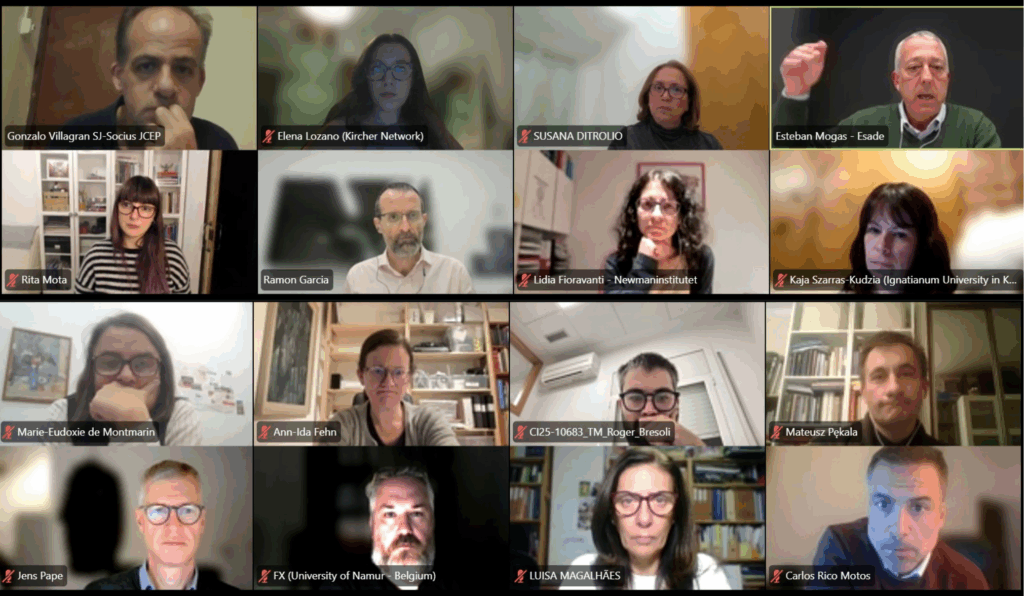
On 5 November 2025, Ramón García and Esteban Mogás (both from ESADE) led the first webinar, “From Professorship to Leading a Higher Education Organization”
This online session focuses on the crucial transition of experts, such as professors, economists, or lawyers, into higher education leadership roles (e.g., Program Manager, Dean, Vice-Rector).
Key Focus Areas:
- Personal Reflection and Action: The training emphasizes that managerial success relies on personal reflection and self-coaching rather than universal formulas or ready-made solutions. The ultimate goal for participants is to learn through reflection and develop a practical action plan.
- Nature of Managerial Work: Managerial and executive work is demanding, characterized by long working hours, a high rhythm, and activities that are often brief, varied, fragmented, and action-oriented. This work is highly «intensive» in interpersonal relationships, involving both lateral and hierarchical connections, and is amplified by new technologies.
- A Holistic Management Model: The presentation advocates for a holistic model encompassing three essential, interconnected components that drive results and impact:
- Strategic Management: What do I want to do?.
- Political Management: What am I allowed to do? (focusing on legitimacy and support).
- Operational Management/Capabilities: What I am able to do?.
- Blending Managerial Roles: Effective management requires balancing various roles, moving beyond traditional concepts like simply planning and controlling. Experts suggest that managing blends controlling (Henry Fayol), doing (Tom Peters), thinking (Michael Porter), leading (Warren Bennis), and deciding (Herbert Simon). Henry Mintzberg identifies the main managerial roles as interpersonal, informational, and decisional, requiring a flexible and adaptive approach tailored to specific organizational contexts.
Core Takeaway: Leaders must recognize the demands of the managerial side of their position, develop all necessary roles, and pay attention to organizational context, while also consistently tending to their «inner life» and «true self».
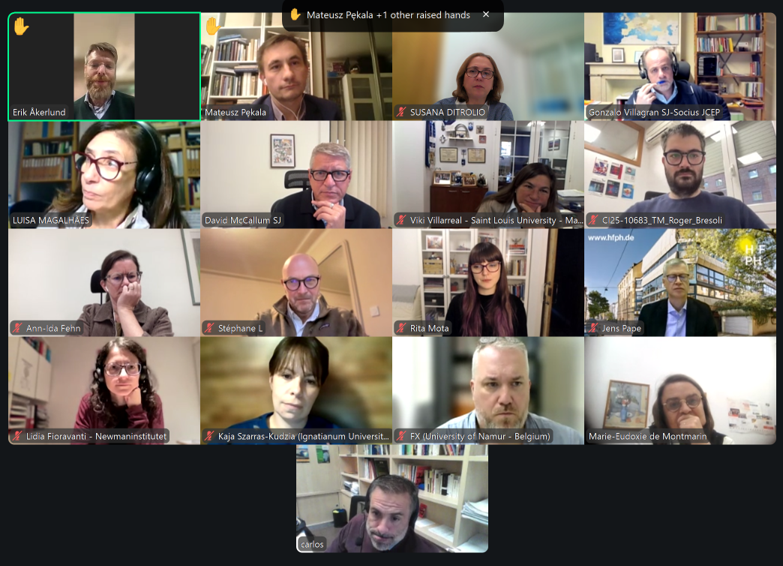
The second webinar, on 12 November 2025, was presented by Fr. David McCallum, SJ. “Leadership In an Ignatian Way of Proceeding: Navigating Polarities”. Fr. McCallum explored the characteristics of leadership informed by the Ignatian tradition, merging professional skills with spiritual maturity and social responsibility. He addressed the challenges of helping Ignatian spirituality permeate communities and the complexities of «reconciliation» in teaching, research, and administration.
Characteristics of Ignatian Leadership:
- Discernment: Understood as a way of being, knowing, doing, and relating that goes beyond simple good judgment. Discernment is necessary, especially when choosing between competing goods.
- Service and Magis: Leadership is oriented toward service with and for others, maintaining a commitment to Magis (depth and quality).
- Foundational Ignatian Spirituality: This spirituality is Christocentric, oriented toward the liberation and integration of the person, and affirms a hermeneutic of finding God in all things, embracing diversity and transcendence.
Navigating Polarities (Creative Tensions): A major focus is shifting from «problem-solving» (which seeks a single, definitive answer using either/or thinking) to «polarity navigation» (which manages permanent, creative tensions using Both/AND thinking).
- Key Polarities in Higher Education: Leaders must navigate ongoing tensions such as: Margin::Mission, Academic excellence::Academic accessibility, Serving the faith::Promoting justice, and Cura Personalis::Cura Apostolica.
- Cura Personalis vs.* Cura Apostolica*: Cura Personalis is the commitment to care for individuals as whole persons, sustaining the mission through investing in people. Cura Apostolica is the commitment to the mission and the common good of the whole work (context, structures, impact). Over-identification with one pole risks negative outcomes, such as overwork (for Cura Apostolica) or losing sight of the common good (for Cura Personalis).
- The Third Way: Moving beyond the downward spiral of polarization involves utilizing a «paradox mindset» that actively seeks out existing tensions, resists premature decisions, and links opposing ideas synergistically. This search for a «Third Way» results in integrated mindsets, such as «Contemplation in Action» or «Tough love».
Ignatian Leadership Practices: To reinforce this approach, leaders are encouraged to practice Daily Examen, participate in Retreats, focus on Building Community, utilize Mentorship, and implement Communal Discernment as a method for advancing shared governance. The ongoing nature of managing these tensions is an invitation to see «polar values in terms of dynamic, interdependent forces that can be managed to maintain an optimal relationship over time».
These webinars formed a critical part of the Canisius Formation’s follow-up phase, helping to bridge the lived experience of the face-to-face retreat in Loyola with ongoing leadership development. By combining intellectual depth, spiritual reflection, and relational engagement, the course continues to strengthen a shared sense of identity and mission among the Kircher Network’s member institutions.